


Regional SOC Utilities: The Future of Shared Municipal Cyber Defense
Aurora, Illinois proved that a single municipality can transform cybersecurity through the MCOP model. But what happens when that success scales across entire regions?
The answer is the Regional Security Operations Center (RSOC) utility, a shared cybersecurity model where municipalities pool resources, share threat intelligence, and strengthen each other's defenses in real time.
It's not just efficient. It's revolutionary.
From Single City to Regional Resilience
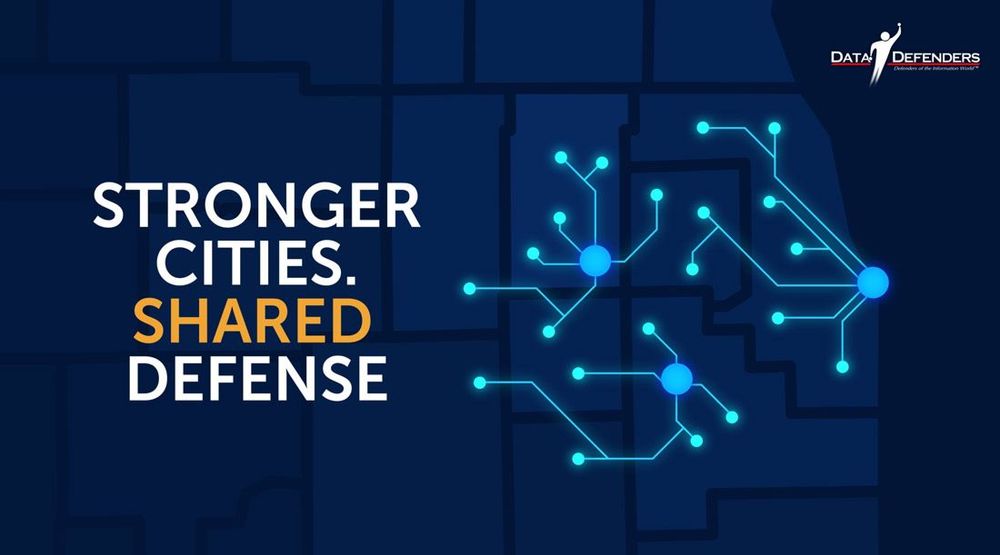
When Aurora implemented Data Defenders' MCOP model, something remarkable happened beyond their borders.
Surrounding communities took notice. Smaller villages and townships that couldn't afford enterprise-grade security saw a path forward. Larger municipalities recognized the efficiency of shared operations.
"Once that foundation is in place, it doesn't stop at one city's borders," explains Michael Pegues, who led Aurora's transformation. **"What we're really talking about is an evolution from a single deployment to a regional security operation center." ** This evolution transforms cybersecurity from isolated municipal efforts into collaborative regional defense.
How Regional SOC Utilities Work
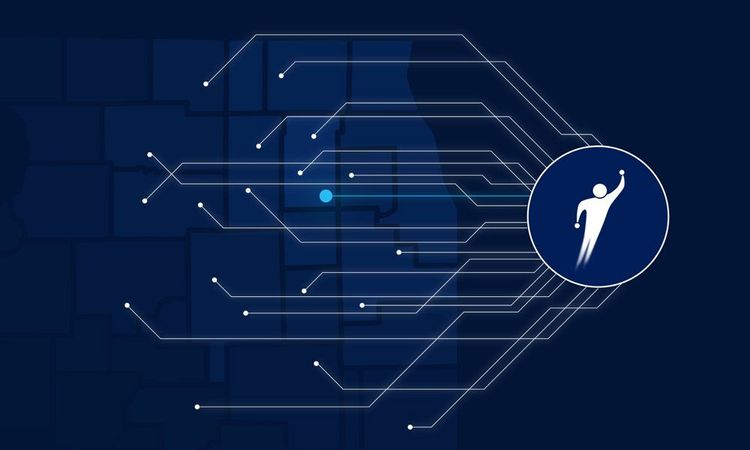
Think of a Regional SOC utility like a power grid or water system, critical infrastructure that communities share for efficiency and reliability.
The Three Pillars of Regional SOC Success
Shared Infrastructure Instead of each municipality building separate security operations centers, they connect to a single, enterprise-grade platform managed by Data Defenders.
- Centralized monitoring across all participating municipalities
- Unified threat intelligence platform
- Integrated incident response capabilities
- Common governance frameworks with municipal customization
Shared Intelligence
"One of the unspoken benefits of a shared services model is the shared intelligence that comes along with that," notes Cyrus Walker, CEO of Data Defenders.
When a threat targets Aurora, surrounding communities like Naperville, Woodridge, Palatine, or Lisle receive immediate intelligence updates, their defenses strengthen automatically.
"In the MCOP model, it allows for that seamless transfer of information immediately," Walker emphasizes. "Unlike an MSSP that is siloed to that particular customer, the MCOP model has a back plane of intelligence sharing."
This means:
- Real-time threat intelligence across all municipalities
- Coordinated response to regional attack campaigns
- Shared learning from incidents and near-misses
- Collective defense stronger than any single municipality
Shared Costs Perhaps most importantly, Regional SOC utilities distribute costs proportionately based on community size and needs.
The Economics of Shared Defense
Traditional cybersecurity creates economic barriers that leave smaller communities vulnerable. Regional SOC utilities eliminate those barriers.
Cost Distribution Models
Participating municipalities contribute based on factors such as:
- Population size: Larger cities pay more, reflecting greater infrastructure
- Budget capacity: Contributions scaled to financial resources
- Technology footprint: Costs aligned to number of systems and endpoints
- Service level: Communities choose coverage tiers matching their needs
"Those costs are shared proportionately based on population, budget, and system size," Pegues explains. "Smaller cities gain access to advanced cybersecurity capabilities without bearing the full financial cost."
Real-World Cost Comparison
Traditional Approach per Municipality:
- Small city (population 50,000): $300,000-500,000 annually for basic MSSP
- Mid-size city (population 150,000): $600,000-900,000 for enhanced coverage
- Large city (population 500,000+): $1M-2M+ for comprehensive SOC
Regional SOC Utility Approach:
- Small city contribution: $75,000-150,000 annually
- Mid-size city contribution: $200,000-400,000 annually
- Large city (anchor) contribution: $500,000-800,000 annually
Every municipality receives enterprise-grade protection. Smaller communities access capabilities they could never afford alone. Larger communities pay less than building in-house while strengthening regional resilience.
Operational Advantages Beyond Cost

While cost savings capture attention, operational benefits drive long-term value.
Dynamic Resource Allocation
"Security operators can immediately scale up and intensify services when needed, then scale down when it's not needed," Walker explains.
When one municipality faces heightened threat activity:
- Additional monitoring resources deploy instantly
- Threat hunting intensifies across the region
- Incident response teams mobilize
- Other municipalities receive preventive intelligence
This dynamic scaling is impossible when each municipality operates independently.
Collective Expertise
Regional SOC utilities create a center of excellence serving all participants:
- Security analysts gain experience across diverse environments
- Best practices spread rapidly through the network
- Lessons learned from incidents benefit everyone
- Specialized expertise (OT/ICS, cloud, IoT) available to all
A small village gets the same expert analysis as the largest city in the region.
Procurement Efficiency
"The challenge is more around budget and bureaucracy at the government level," Pegues notes. "It's typically not a challenge to onboard municipalities from an MCOP perspective."
Regional SOC utilities streamline procurement:
- Joint contracts satisfy procurement requirements
- Shared vendor evaluation and due diligence
- Coordinated budget cycles
- Simplified compliance documentation
One negotiation. One contract. One vendor relationship. Multiple protected communities.
Scalability: From Township to Metropolis
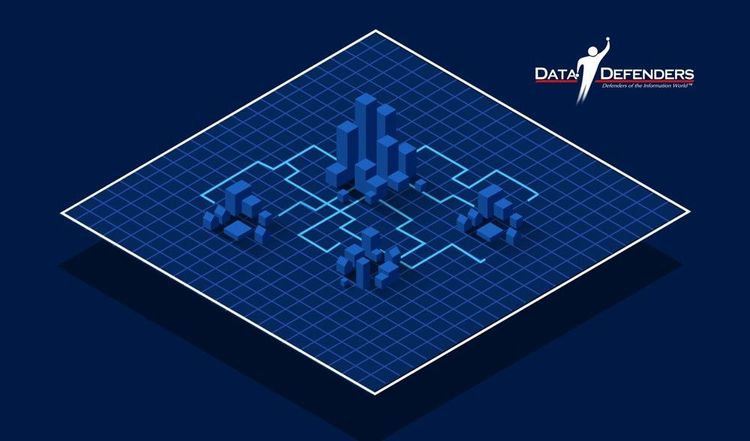
"This particular framework is built to look at it as almost like a shared service model," Pegues explains. "If you set something up in a regional framework with surrounding suburbs, villages, or townships, it's easy to get them on board."
How Different-Sized Communities Benefit
Small Municipalities (Under 50,000):
- Access enterprise-grade security impossible to build alone
- Minimal staff burden beyond governance oversight
- Protection for critical services (water, emergency services)
- Compliance support for federal and state requirements
Mid-Size Cities (50,000-200,000):
- Comprehensive coverage without full SOC investment
- Integration with existing IT infrastructure
- Scalability as city services expand
- Regional threat intelligence sharing
Large Municipalities (200,000+):
- Cost savings versus in-house SOC development
- Leadership role in regional security
- Enhanced threat intelligence from broader network
- Opportunity to support smaller neighbors
"The MCOP provides flexibility to expand services as the city adopts new technology," Pegues notes, referencing Aurora's expansion from enterprise systems to water treatment plants, IoT networks, and cloud services.
Trust and Partnership: The Foundation
Technology and economics matter, but Regional SOC utilities succeed or fail based on something more fundamental: trust.
"The consideration of trust allows the municipality to relinquish control in a controlled way," Walker emphasizes. "Trust that the vendor's going to do what the vendor's going to do, which is manage and deliver operations, while the customer controls the governance and strategy aspect."
This trust operates at two levels:
Between Municipality and MCOP Provider:
- Clear governance frameworks defining responsibilities
- Transparent reporting and communication
- Collaborative strategic planning
- Proven operational track record
Between Participating Municipalities:
- Shared commitment to regional security
- Coordinated incident response protocols
- Joint tabletop exercises and planning
- Collective investment in resilience
Walker shares a powerful lesson from his experience: "Without that trust, you're gonna naturally have conflict, and when you have conflict, things don't work."
He recalls a situation where a $10 million network upgrade kept failing. The customer was ready to spend another $10 million replacing it. The problem wasn't technology. It was broken trust between customer and vendor.
"It wasn't until I came in and identified the trust issue that we were able to find the problem, fix it, and save the account for both vendor and customer," Walker explains.
Regional SOC utilities build trust through:
- Consistent, reliable performance
- Transparent communication during incidents
- Collaborative governance with municipal input
- Proven results (like Aurora's zero major incidents)
The Cybersecurity Lifecycle in Regional Context
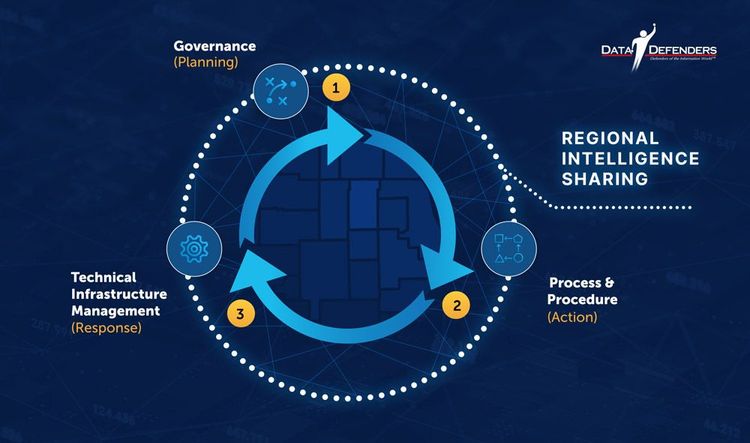
Earlier in this series, we explored the three-component cybersecurity lifecycle: Governance, Process & Procedure, and Technical Infrastructure Management.
Regional SOC utilities enhance each component:
Governance & Strategy:
- Coordinated policy frameworks across municipalities
- Shared compliance programs
- Regional risk assessments
- Collective strategic planning
Process & Procedure:
- Standardized incident response across region
- Joint tabletop exercises and training
- Coordinated vulnerability management
- Shared best practices and lessons learned
Technical Infrastructure Management:
- Unified security operations platform
- Integrated threat intelligence
- Coordinated 24/7/365 monitoring
- Collective defense automation
"The lifecycle itself basically means you go through this process, come back to the starting point, and start all over again," Walker explains. "The whole point of that is evolution. As you've gone through that process once, you've learned a lot. You add that information back into the stream of operation, which translates into an evolution of the operation."
In a Regional SOC utility, this evolution happens faster because lessons learned by one municipality benefit all others immediately.
Real-World Implementation: Getting Started
For municipal leaders considering Regional SOC utilities, here's the practical path forward:
Phase 1: Assessment and Planning (30 Days):
- Identify potential regional partners
- Map current cybersecurity posture and gaps
- Calculate cost sharing based on community factors
- Define governance structure and decision-making
Phase 2: Partnership Development (30-60 Days):
- Establish joint procurement framework
- Negotiate cost-sharing agreements
- Define service levels and coverage
- Create memorandums of understanding
Phase 3: Deployment and Integration (60-90 Days):
- Deploy unified security operations platform
- Integrate municipal systems and networks
- Establish threat intelligence sharing
- Launch 24/7/365 monitoring and response
Phase 4: Continuous Operations (Ongoing):
- Regular tabletop exercises across region
- Quarterly governance reviews
- Continuous threat intelligence updates
- Annual strategic planning sessions
Download our complete 90-Day Regional SOC Implementation Plan for detailed guidance.
Beyond MS-ISAC: A Sustainable Model
The end of MS-ISAC services created a crisis. Regional SOC utilities transform that crisis into opportunity.
Instead of each municipality struggling alone to replace lost capabilities, regions can build something stronger than MS-ISAC ever provided:
- More comprehensive coverage
- Faster threat response
- Better intelligence sharing
- Sustainable cost structure
- Scalable to any community size
"It's a scalable partnership that adapts to city sizes or needs, whether it's a small municipality or a large metro," Pegues emphasizes.
Most importantly, it's not dependent on federal funding or state programs. It's a self-sustaining model built on shared interest in regional security.
The AI-Accelerated Threat Landscape
"Particularly now that we're dealing with AI accelerating the evolution of threats, the lifecycle has to continue to evolve as well," Walker warns.
AI-powered attacks are:
- More sophisticated in targeting
- Faster in exploitation
- Better at evading detection
- More efficient in scaling
Individual municipalities struggle to keep pace. Regional SOC utilities create collective defense that matches AI-accelerated threats with AI-enhanced protection.
Data Defenders' DataShield CyberSecurity 360 platform leverages AI for:
- Predictive threat modeling
- Automated response orchestration
- Behavioral anomaly detection
- Continuous security posture optimization
When AI-powered threats target the region, AI-enhanced defense responds across all participating municipalities simultaneously.
For deeper analysis of AI-driven threats, read: 60 Minutes Exposed the Threat — Data Defenders Built the Solution. or watch the podcast edition: Ep 2: 60 Minutes Exposed The Threat: Data Defenders Built The Solution
Making Cybersecurity Operational, Not Compliance Theater

"Embedding that tabletop exercise into the MCOP lifecycle makes cybersecurity a living, breathing operational aspect, not just a 'check the box' compliance exercise," Pegues emphasizes.
Regional SOC utilities transform cybersecurity from:
From:
- Annual compliance audits
- Checkbox security reviews
- Isolated point solutions
- Reactive incident response
To:
- Continuous security operations
- Real-time threat response
- Integrated defense platforms
- Proactive threat hunting
"A cyber threat in the City of Aurora was updated within our city ordinance as an incident that requires utmost importance, just like a flood or tornado," Pegues notes.
When cybersecurity becomes operational rather than theoretical, municipalities build true resilience.
Your Path Forward
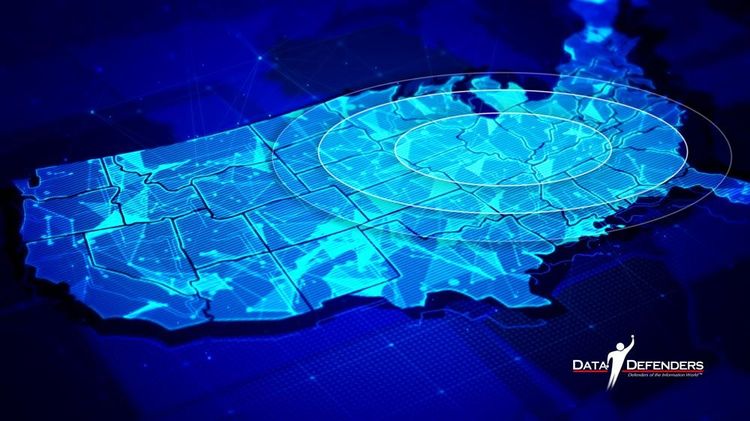
The Regional SOC utility model isn't theoretical. It's operational in Illinois and expanding to regions nationwide.
The municipalities thriving in the post-MS-ISAC landscape aren't those with the biggest budgets. They're those with the right partnerships.
Your choice is clear:
Continue alone: Build isolated defenses, compete for scarce talent, face threats without shared intelligence.
Or join together: Pool resources, share intelligence, access enterprise-grade security, strengthen regional resilience.
The Regional SOC utility model makes enterprise-grade cybersecurity accessible to every community, regardless of size or budget.
Because awareness without action leaves communities exposed. But collective action builds resilience that protects everyone.
Ready to understand the transformation?
Watch to Ep 5 | Part 3: From MSSP To MCOP: How SLTTs Are Redefining Cybersecurity Partnership
Connect with a cybersecurity expert to explore how Regional SOC utilities can work for your region today!
Frequently Asked Questions
How many municipalities need to participate for a Regional SOC utility to work?
There's no minimum. Even 2-3 municipalities create meaningful cost sharing and intelligence benefits. Optimal regions typically include 5-15 communities, balancing economies of scale with governance complexity.
What if neighboring municipalities aren't interested yet?
Start with interested communities and grow organically. As early participants demonstrate results, neighbors typically join. Aurora's success attracted surrounding communities naturally.
Do all participating municipalities need the same technology stack?
No. The MCOP model integrates diverse technology environments. Municipalities keep existing investments while gaining unified monitoring and response.
How is sensitive information protected when intelligence is shared?
Threat intelligence shares attack patterns and indicators, not sensitive municipal data. Each municipality maintains data sovereignty while benefiting from collective threat awareness.
Can we leave a Regional SOC utility if it's not working?
Yes. Contracts include exit provisions. However, Aurora's experience shows sustained value grows over time as the regional network matures and intelligence sharing improves.
How does this work across state lines?
Regional SOC utilities can span state boundaries. Governance frameworks accommodate different state requirements while maintaining unified operations.
About Data Defenders
Data Defenders pioneers Regional SOC Utilities, bringing enterprise-grade cybersecurity operations to municipalities nationwide through shared infrastructure, intelligence, and costs. Our proven MCOP model transforms isolated municipal security into collaborative regional defense.
Protect and Secure What Matters.